
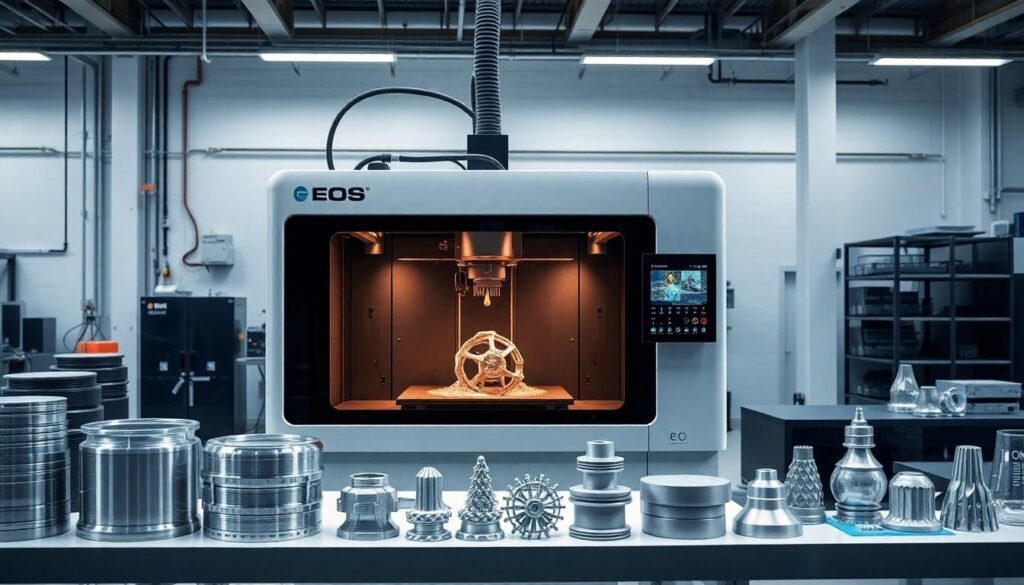
In a world where innovation meets imagination, EOS 3D printing stands at the forefront, ready to transform the way industries create. Forget the days of tedious manufacturing processes; with EOS, it’s all about printing your dreams into reality—layer by layer. This technology isn’t just for techies in lab coats; it’s for anyone who’s ever thought, “Wouldn’t it be cool if I could just print that?”
From aerospace to healthcare, EOS 3D printing is revolutionizing production with speed and precision. It’s like having a magic wand that turns digital designs into tangible objects, minus the fairy dust. Whether you’re looking to prototype a new gadget or produce end-use parts, EOS has the solution. Buckle up as we dive into the world of EOS 3D printing, where creativity knows no bounds and the only limit is your imagination.
Overview of EOS 3D Printing
EOS 3D printing represents a pioneering approach to additive manufacturing, leveraging powerful laser technologies. The process uses precise lasers to fuse layers of material, which facilitates high-quality part creation. Various materials, including polymers and metals, can be utilized, catering to diverse applications.
This technology excels in speed and efficiency, enabling rapid production cycles that traditional methods can’t match. Fields such as aerospace and healthcare benefit significantly from EOS 3D printing, offering solutions that enhance product performance and reduce material waste.
With its ability to produce complex geometries, EOS 3D printing supports innovative designs that were previously unattainable. Customization becomes straightforward, allowing designers to create tailored components that meet specific requirements.
EOS offers a range of machines that cater to different production needs. These systems include the EOS Nylon series for lightweight polymer parts and the EOS Metal series for sturdy metal components. Each model focuses on delivering high precision and reliability throughout the manufacturing process.
Additionally, EOS provides a comprehensive ecosystem including software solutions that optimize the design-to-manufacturing workflow. Data-driven insights enhance decision-making, ensuring that production meets quality standards while maintaining efficiency.
In essence, EOS 3D printing stands out as a transformative technology in modern manufacturing. Its capabilities empower industries to innovate and streamline operations effectively, ensuring a competitive edge in the market.
Key Technologies Behind EOS 3D Printing


EOS 3D printing is driven by advanced technologies that enable high-quality manufacturing. Each technology enhances the production process, catering to various industry needs.
Laser Sintering
Laser sintering serves as a core technology in EOS 3D printing. This process involves powerful lasers that precisely fuse powdered materials layer by layer. The result is the creation of intricate shapes that traditional manufacturing struggles to achieve. Speed is critical; laser sintering allows for quick prototyping and shortens production cycles. By enabling complex geometries, manufacturers can develop custom components tailored to specific requirements. This capability has significant implications for industries such as aerospace and healthcare, where innovation and precision are vital.
Polymeric and Metal Applications
EOS 3D printing excels in both polymeric and metal applications. With polymers, manufacturing lightweight and durable parts becomes feasible, offering efficiency without compromising quality. The EOS Nylon series reflects this versatility, enabling the production of strong polymer components. Metal applications, such as those from the EOS Metal series, enhance structural integrity for demanding uses. These applications allow industries to create functional end-use parts with superior mechanical properties. This dual capability empowers companies to choose materials based on project requirements, streamlining their manufacturing processes.
Advantages of EOS 3D Printing
EOS 3D printing offers a variety of advantages that stand out in modern manufacturing. Precise engineering and material flexibility position this technology as a leading choice for numerous industries.
Precision and Detail
Precision defines EOS 3D printing, where laser sintering ensures accurate layers fuse seamlessly. This technique allows for creating intricate parts with fine details that traditional methods often cannot achieve. High resolution in finished products supports quality standards in aerospace and healthcare applications. Each component reflects consistent dimensional accuracy, ensuring that designs meet exact specifications. High-definition printing processes allow designers to push boundaries, resulting in innovative solutions that enhance performance in various sectors. Customers appreciate this unparalleled level of detail, making EOS the go-to solution for demanding projects.
Material Versatility
Material versatility plays a significant role in the appeal of EOS 3D printing. A broad selection of polymers and metals meets different application requirements. For instance, the EOS Nylon series provides lightweight yet durable components suitable for high-performance uses. In contrast, the EOS Metal series excels in producing parts that require exceptional structural integrity. This flexibility supports rapid prototyping and end-use part manufacturing, adapting to diverse design needs efficiently. Additionally, ongoing advancements in materials further expand the possibilities, catering to emerging technology demands. Companies benefit from this ability to utilize various materials, enhancing their production processes and outputs effectively.
Challenges in EOS 3D Printing
EOS 3D printing presents various challenges that can impact its implementation and effectiveness.
Cost Considerations
Costs associated with EOS 3D printing can be significant. Initial investments in EOS machines often require substantial capital, which can deter smaller businesses. Material expenses add to the overall cost, particularly when using high-quality powders. Maintenance and operating costs further contribute, necessitating ongoing financial resources. Businesses must analyze long-term operational efficiencies to justify these expenses. Without careful financial planning, the high costs could overshadow potential benefits in speed and precision.
Post-Processing Requirements
Post-processing in EOS 3D printing is essential but can be complex. Parts typically require treatments to remove excess powder and achieve desired surface finishes. Many metal components need heat treatments to enhance strength and durability. Additional processes like polishing, painting, or coating may further elevate final part quality. Each of these steps expands production timelines and necessitates specialized equipment. Lack of efficient post-processing can hinder the overall workflow, impacting delivery times and operational efficiency.
Future Trends in EOS 3D Printing
EOS 3D printing is set to evolve significantly within the coming years. Enhanced material development will support the creation of stronger and lighter components, broadening the range of applications. Advancements in polymer and metal materials will contribute to improved performance in demanding industries like aerospace and healthcare.
Cross-industry collaboration is likely to amplify innovation in 3D printing techniques. Partnerships among manufacturers, material scientists, and software developers will drive new solutions that enhance capabilities. This collaboration builds on existing technology, making EOS 3D printing even more adaptable to various needs.
Sustainability in manufacturing demands attention. EOS is focusing on recycling and reusing materials to minimize waste, aligning with global environmental goals. Innovative approaches in material sourcing and processing will facilitate eco-friendly practices, attracting environmentally conscious companies.
Automation is becoming crucial in EOS 3D printing processes. Smart technologies and AI are likely to streamline operations, reducing the time from design to production. By implementing predictive maintenance and data analytics, manufacturers can optimize machine performance and ensure consistent quality.
Customization continues to gain importance in end-use applications. EOS 3D printing’s ability to create complex geometries caters to niche markets that require tailored solutions. As customer preferences evolve, the demand for personalized products will drive further innovations in this space.
Investment in developing EOS 3D printing platforms is crucial for future competitiveness. Ongoing research into faster printing speeds and higher precision will enhance efficiency. These improvements aim to reduce costs and increase overall productivity, solidifying EOS as a leader in modern manufacturing technology.
EOS 3D printing is reshaping the landscape of manufacturing with its unmatched precision and versatility. As industries embrace this innovative technology, they unlock new possibilities for design and production. The ability to create complex geometries and customize components is driving efficiency and performance across sectors like aerospace and healthcare.
While challenges such as cost and post-processing complexities exist, the benefits far outweigh the drawbacks for many businesses. Continued advancements in materials and automation will further enhance the capabilities of EOS 3D printing. As companies invest in this technology, they position themselves for future success, ready to meet the demands of an ever-evolving market.